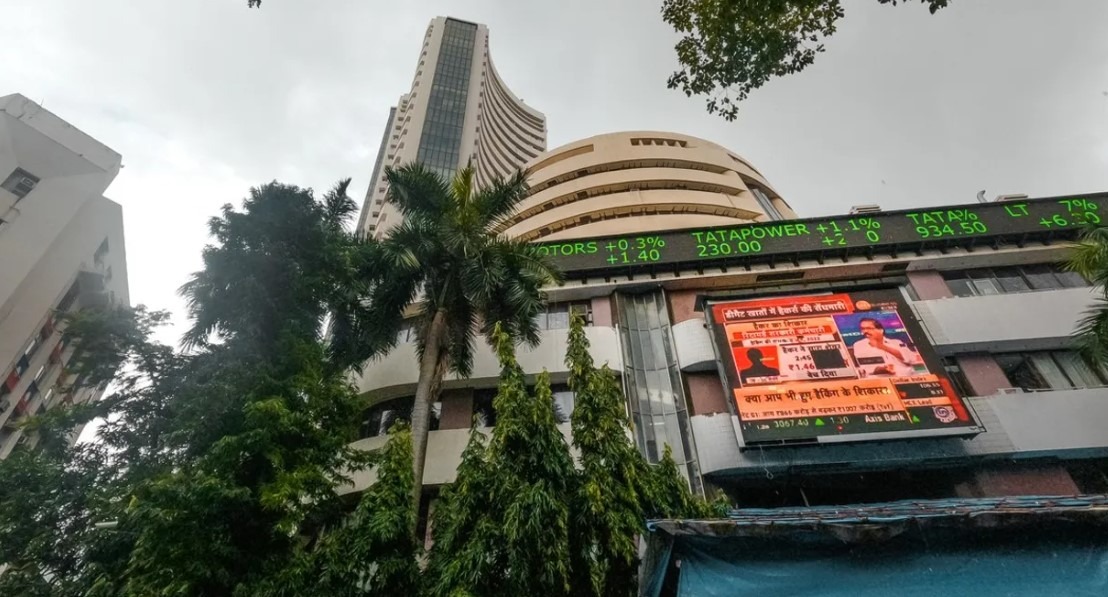
Stock Markets Retreat in Early Trade Amid Geopolitical Tensions and Tariff Fears
Indian equity markets opened lower on Wednesday as investors reacted to geopolitical uncertainties and renewed U.S. tariff threats. The BSE Sensex slipped to 84,909.30, while the NSE Nifty 50 eased to 26,128.90 in early trade.
Sustained foreign fund outflows also added to the downward pressure, while global cues further contributed to cautious trading in Indian markets.
Benchmark Indices Overview
- Index Previous Close Current Level Change
- BSE Sensex 85,346.79 84,909.30 -437.49
- NSE Nifty 50 26,346.20 26,128.90 -217.30
Early trade showed range-bound movement, with stock-specific gains and losses driving the market rather than a broad directional trend.
Sector-wise Performance
IT & Technology: Stocks like Infosys, HCL Tech, Tech Mahindra posted modest gains, supported by steady demand for IT exports and positive quarterly results.
Consumer & Retail: Titan emerged as a gainer, reflecting stable domestic consumption.
Banking & Financials: Most banks traded lower amid concerns over liquidity and global rate hikes. HDFC Bank and Bajaj Finance were notable laggards.
Energy & Reliance: Reliance Industries recorded small gains, aided by stable crude prices and retail business performance.
Reasons Behind the Market Movement
1. Geopolitical Concerns
Global geopolitical tensions have triggered risk-off sentiment. Investors are wary of potential supply chain disruptions, market volatility, and shifts in trade policies.
2. Renewed Tariff Threats
The threat of new U.S. tariffs on Indian exports has created uncertainty, particularly for export-driven sectors like textiles, chemicals, and IT services. Analysts warn that higher tariffs could pressure corporate earnings.
3. Foreign Institutional Investor Outflows
Net foreign fund outflows in recent sessions also contributed to market weakness. FIIs remain cautious amid global monetary policy tightening, rising interest rates, and inflation concerns.
Historical Context
Markets have historically reacted sharply to geopolitical and trade-related news:
2022–23: Sensex and Nifty dropped over 5% during U.S.–China trade tensions.
2024: RBI rate hikes caused mid-cap and banking stocks to retrace.
This demonstrates the sensitivity of Indian markets to global economic conditions.
Analyst Insights
According to analysts, the early decline is largely sentiment-driven rather than fundamentally driven:
“The indices are responding to headline risks rather than deteriorating fundamentals. Sectoral performance remains stable, and corporate earnings continue to support selective stocks,” said Amit Sharma, Senior Equity Analyst, Mumbai.
Experts recommend cautious trading for retail investors, with a focus on high quality stocks and sectors with strong fundamentals.
Investor Takeaways
Retail Investors: May find entry points in fundamentally strong stocks.
Traders: Should use stop-loss strategies as volatility may remain high.
Corporates: Export-heavy companies could face pressure if tariff threats materialize.
Market Outlook
Markets are expected to remain range-bound in the near term, with sectoral trends and stock-specific news driving short-term movements. A resolution of geopolitical tensions or clarification on tariff policies could stabilize markets.
Key takeaway: Focus on quality stocks, maintain diversified portfolios, and watch global cues and central bank policies closely.
Conclusion
The early decline in Sensex and Nifty highlights how global and domestic factors interplay to shape investor sentiment. While headline news often triggers short-term volatility, the underlying economic and corporate fundamentals continue to guide medium-to-long-term market trends.
Investors are advised to remain informed, cautious, and strategic in their decisions amid ongoing global uncertainties.
Post a comment